
Home Safety Features Worth Installing to Protect Your Family and Property
Carbon monoxide poisoning sends thousands of people to the emergency room every year, and many of those cases trace back to heating equipment that was never properly inspected or paired with a working detector. That single fact shapes how we at Service Now approach home safety. The systems we install and service every day across Canton, OH, Massillon, OH, Blacklick, OH, Wooster, OH, New Albany, OH, and North Canton, OH are the same systems that, when neglected, become the source of hidden dangers. Protecting your family starts with understanding which safety features actually make a difference and how to install them correctly.
This guide walks through the home safety features that deliver the most protection for the money. Each one connects to the plumbing, heating, and cooling work we perform. We do not treat safety as an add-on. We treat it as part of a complete and responsible installation.
Carbon Monoxide and Smoke Detection
Carbon monoxide is colorless, odorless, and tasteless, which makes it impossible to detect without the right equipment. Gas furnaces, water heaters, and boilers all produce combustion gases that must vent safely out of your home. When a heat exchanger cracks or a flue becomes blocked, those gases can leak into living spaces. A quality carbon monoxide detector gives your family the early warning that nothing else can provide.
We recommend placing carbon monoxide detectors on every level of the home and near sleeping areas. Combination units that detect both smoke and carbon monoxide reduce clutter and simplify maintenance. When our NATE certified technicians service your heating equipment, we check combustion readings and venting to confirm the equipment runs clean. Detection devices and well-maintained equipment work together as one safety layer.
- Placement matters: Install detectors near bedrooms and on each floor, including the basement where heating equipment often lives.
- Power backup: Choose units with battery backup so protection continues during a power outage.
- Replacement schedule: Most carbon monoxide sensors wear out after five to seven years, so note the manufacture date and plan ahead.
Water Leak and Flood Protection
Water damage ranks among the most common and expensive problems a homeowner can face. A burst supply line, a failed water heater, or a backed-up sump pump can release hundreds of gallons into your home in a matter of hours. Automatic water leak detection systems have become far more affordable and effective, and they pair naturally with the plumbing work we handle.
Smart leak detectors use sensors placed near water heaters, washing machines, sinks, and sump pits. When moisture is detected, the system sends an alert to your phone and, in advanced setups, triggers an automatic shutoff valve that cuts the water supply at the main line. This stops a small leak from becoming a flooded basement. We install these valves as part of broader plumbing upgrades and can tie them into the fixtures most likely to fail.
Sump pumps deserve special attention in Ohio, where spring storms and snowmelt test drainage systems every year. A battery backup sump pump keeps your basement dry even when the power goes out during a storm, which is exactly when flooding risk peaks. We also recommend checking the discharge line regularly to confirm water moves away from the foundation.
Safer Heating and Cooling Systems
Modern HVAC equipment includes safety features that older systems simply lacked. High-efficiency furnaces use sealed combustion and dedicated intake and exhaust piping, which keeps combustion gases isolated from your indoor air. Flame sensors and pressure switches shut the unit down automatically when conditions fall outside safe limits. When we perform heating service or AC repair, we test these safeties to confirm they respond correctly.
Proper installation is where safety is won or lost. An undersized or oversized system cycles poorly, stresses components, and shortens equipment life. We size every system to the home using established load calculations rather than guesswork. We show up when we say we will, on time, every time, and that reliability carries through to the care we take with safety-critical details like gas pressure, electrical connections, and condensate drainage.
Electrical and Environmental Safeguards
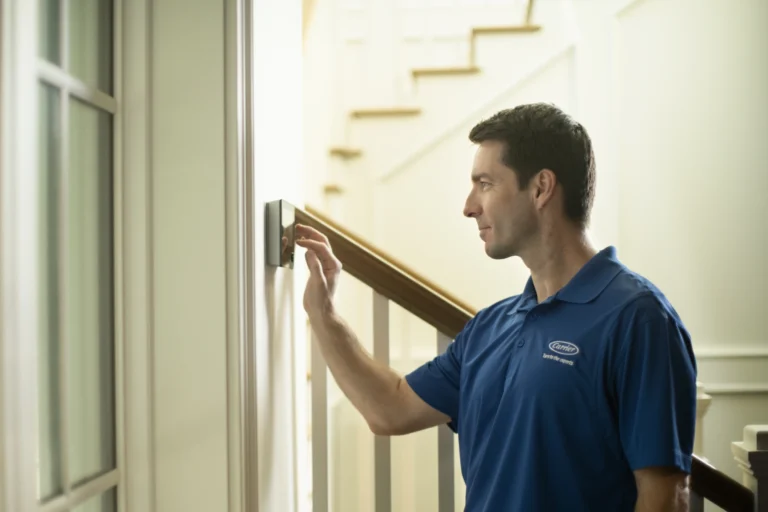
Many safety features sit at the intersection of comfort and protection. Programmable and smart thermostats prevent dangerous temperature extremes, and some models alert you when your home drops near freezing, which gives you time to act before pipes burst. Whole-home surge protection shields expensive HVAC electronics and water heater controls from lightning and grid spikes.
Here is a practical order of priority when you plan safety upgrades:
- Detection first: Install carbon monoxide and smoke alarms before anything else, since they protect lives directly.
- Automatic shutoffs: Add leak detection and water shutoff valves to limit property damage.
- Backup systems: Install battery backup for sump pumps and critical alarms.
- System health: Schedule regular maintenance so furnaces, boilers, and AC units stay within safe operating ranges.
Our prices are affordable and competitive, and we size each recommendation to your home rather than selling features you do not need. When you are ready to make your home safer, Service Now can inspect your current setup, explain your options in plain language, and install the protections that matter most for your family and property.